Chris From Beachside
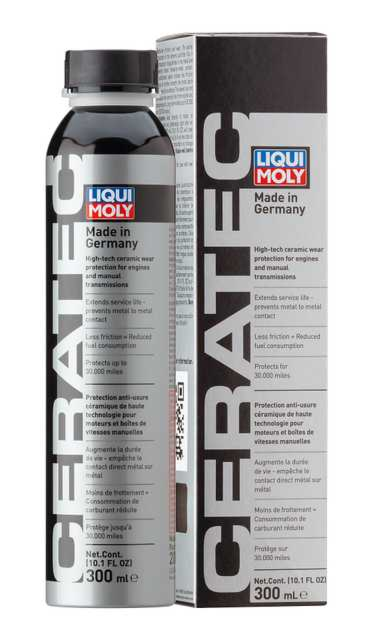
Liqui-Moly Ceratec
Liqui-Moly Ceratec
Couldn't load pickup availability
Most oil additives make big claims with nothing behind them. I pulled the SDS and product data sheet on Ceratec before it ever made this list. Here's what the chemistry actually is and why it matters.
Ceratec uses two active systems working together. The first is boron nitride ceramic particles — sub-micron, meaning under half a thousandth of a millimeter. That size is critical. They're small enough to pass through fine oil filters and actually reach the metal surfaces that need protection. Once there, they form a physical barrier between moving parts. The second is a molybdenum compound that works chemically — it bonds to metal surfaces under pressure and heat, reducing friction exactly when your oil film is at its thinnest. Cold starts before oil pressure builds. High load situations where temperatures spike. That's when engines wear the most, and that's precisely when these two compounds are doing their job.
Together they're not just lubricating. They're protecting the metal itself. Liqui-Moly's own technical documentation supports a protection window of up to 30,000 miles per treatment.
Works in gasoline and diesel engines, with or without turbos. Also suitable for manual transmissions and compressors.
Not for: Automatic transmissions, Dual Clutch Transmissions (DCT), Direct Shift Gearboxes (DSG), or wet clutch systems.
How to Use
One 300ml can treats 3 to 5 quarts of motor oil. Add it directly to your engine oil — shake the can well first, the ceramic particles settle. It can go in at your oil change or between changes.
On frequency — Liqui-Moly's technical documentation shows a protection window of up to 30,000 miles per treatment. If you're changing oil every 5,000 miles you don't need it every single change. A reasonable approach is every other oil change, or any time you feel like your engine needs extra protection — high mileage milestone, extended tow, track day.
Use it every change if you want maximum protection. But you don't have to.
Who needs this: High mileage engines, turbocharged engines, anyone serious about making their motor last.
Share